

Hi, hi all!
On the days I pulled this issue together, I fell in love with every winner in the Japanese Stationery Awards 2026, longed to play Tetris on a magazine cover, made a mental note to visit the new Apple Museum in the Netherlands, nerded out on the best book covers of the last decade, browsed the AIGA New York poster archive, and explored why everything has a cartoon character on it now.
Lots of physical, real-world things everywhere.
Okay, now onto this issue.
For this one, the featured story is less esoteric and more prescriptive than my recent run. It’s a take on what brands and creators need to prioritize in order to win in this new era of internet-centric culture.
From there, the Roundup and Future Movie Plots are packed with intrigue. And, the closing Because It’s Beautiful spotlight is another add on my Places I Need to Visit list.
Off we go into Issue 51.
Owned Surfaces
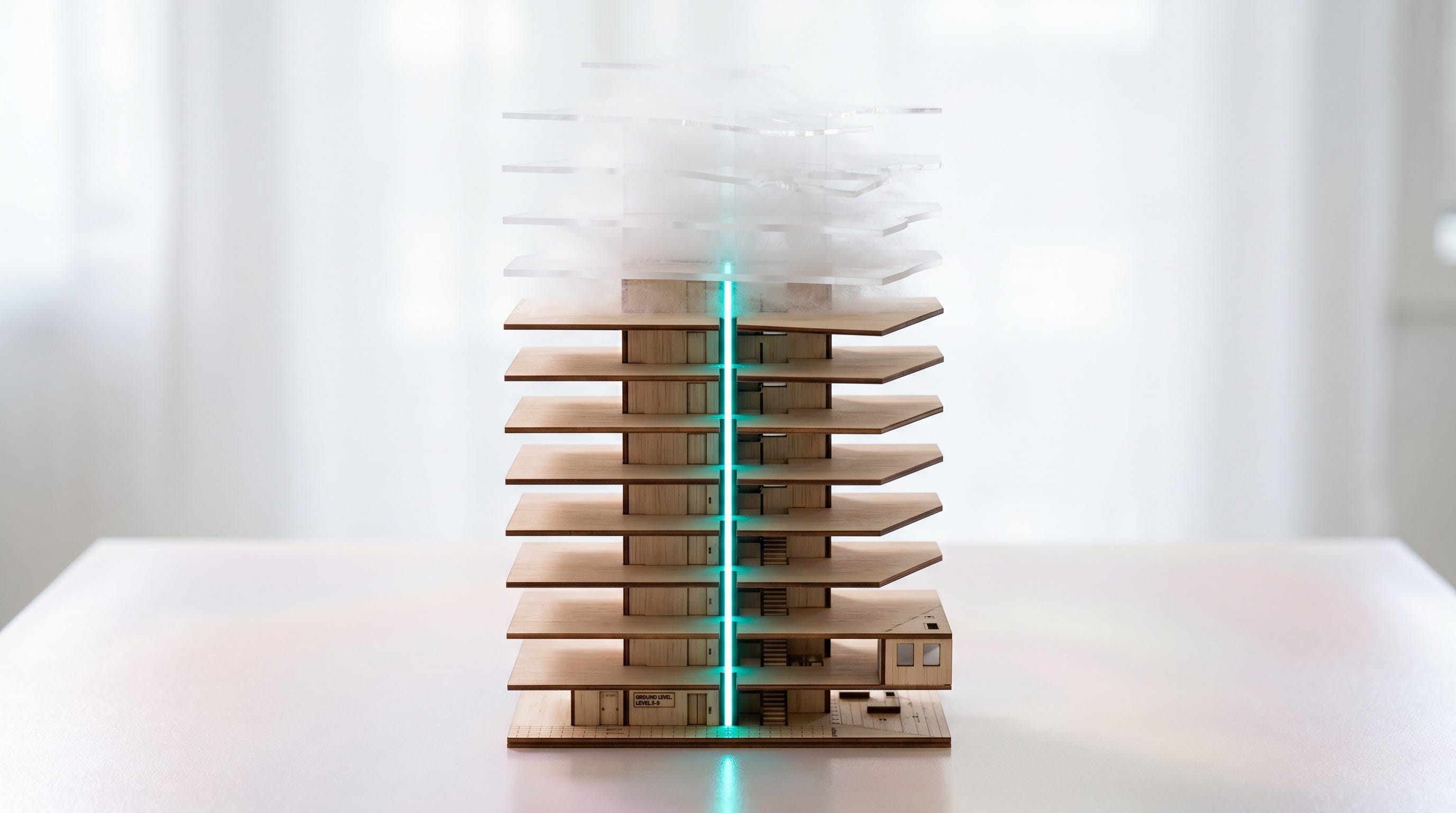
Followers, search, and AI answers — every connection layer is breaking at once. The brands that compound over the next decade will be the ones that own the surface where the audience actually lives.
For most of the last decade, the playbook for reaching people online was simple. Build a following. Post into the feed. Optimize for search. Let the algorithms do the rest. It worked.
Then, in the last twelve months or so, every layer of it started changing.
Followers stopped meaning reach. Search traffic stopped showing up. AI started answering the questions our content used to answer.
If you’re a marketer, a creator, or anyone posting anything online, you’ve felt it. And on the other end of those algorithms, audiences have felt it too. Just differently.
What did our LinkedIn neighborhood become?
I’m a heavy LinkedIn user, and I miss how LinkedIn used to work — and feel.
It used to feel like a professional neighborhood. People you’d worked with, people you wanted to work with, the occasional good idea floating by. The feed was value-generating. The feed created discovery.
Now it’s a content arena.
When I post on LinkedIn (or any of the big social platforms), I’m stuck on the same problem from the other side. For brands, the stakes are bigger. They’ve built audiences they can no longer reach. They’re shouting into a feed that decides what gets through.
Two groups: audiences and creators.
Same platforms.
No longer actually connected.
That gap is the opportunity. Whoever figures out how to close it gets the next decade.
How fast is the middle collapsing?
Two of the layers we built our reach on are failing.
Social feeds.
2025 was the year the algorithm fully took over. As LTK CEO Amber Venz Box told TechCrunch, followings stopped mattering. You can have a million followers and post into a void. Patreon’s Jack Conte has been calling this out for years.
Now everyone is feeling it. Underneath that, agents are flooding the zone — so much so that Digg was reborn and then quickly pulled the plug when they couldn’t win the bot battle.Search.
Google’s AI Mode and AI Overviews are doing to brand websites what the algorithm did to social reach. ChatGPT, Perplexity, Claude, Gemini — all of them are pulling content out of brand sites and answering questions without sending users to the source.
According to Reuters Institute data published in early 2026, publisher search traffic dropped about a third globally in a single year. HubSpot, Forbes, and Business Insider are all reporting steep organic declines. Media leaders are forecasting another 43% decline over the next three years. Zero-click queries are pushing toward 70%.
Every middle layer is getting between brands and the audiences they earned.
What does an owned surface actually look like?
The temptation right now is to optimize for these middle layers. Tune for the algorithm. Game the AI Overview. Buy the ad. There’s a whole consulting economy built around it.
That work is real, and some of it pays off short-term. But it’s renting. The rent keeps going up, and the algorithm keeps taking more of the room.
The structural move underneath all of this is a throwback to where the internet began: build something you own and bring people to it.
The owned surface, from most familiar to most defensible:
Email, SMS, push, and direct channels you control (with first-party data and behavior as the long-term asset, not platforms that throttle you)
Communities you host (Discords, forums, member spaces, smaller and more intentional than the feeds people are leaving behind)
Memberships and clubs (paid and unpaid, where presence is intentional)
Digital memory stores that compound context over time (where brands create walled gardens of personal context — every interaction makes the next one smarter)
In-person events and shared experiences (the most defensible surface of all, and increasingly the most essential one)
None of this is new advice. What’s new is that this is now the biggest advice to follow.
Own the surface.
Or accept that we’ll keep paying rent on someone else’s, with terms that get worse every quarter.
What can we learn from new social web explorations?
That said, social platforms aren’t dead. They just look very different now.
A few new products are exploring new user experience patterns in real time — and they make for great bets to study.
Bond launched this month with no feed at all. You post “memories” about what you’ve actually done. The product uses that to recommend things to do next. The relationship is the memory archive. The product’s job is to deepen it, not to keep you scrolling.
The bet: archives compound. Feeds don’t.
SaySo, a short-form news app from the team formerly known as The News Movement, is a daily digest that refreshes once every twenty hours. Vetted creators. Sourced videos. Direct editorial relationships instead of algorithmic ones.
The bet: editorial trust beats algorithmic curation.
Facebook, of all places, is quietly building a friends-only feed with less algorithmic content. The animated profile pictures and confetti backgrounds are getting the headlines. The structural admission underneath is the interesting part.
The bet: even Meta knows the feed is the wrong place for friends.
For brands, each of these is an exploration into new ways to build and deepen relationships online — explorations into new ways to grow connections with compounding archives.
How do we make the transition?
The playbook for the last decade was reach.
The playbook for the next decade is relationship ownership.
That doesn’t mean throwing the social and search work away tomorrow. It means starting the migration now, while the rent is still affordable. Here’s what that looks like:
Treat first-party data as the long-term asset it is.
Audit what you have, who collects it, where it lives, and how it compounds. The brands that win the next decade will have started this work in 2026.Pick one owned surface to over-invest in this year.
Not five. One. Pick the surface that fits your relationship with your audience — email, community, membership, events — and resource it like it matters, because it does.In-person needs more of your focus — budget, money, time — than it had last year.
For the last two years, I’ve championed the shift in CMO priorities toward events and experiential marketing. Gartner puts numbers behind the same idea, predicting that by 2028, CMOs will spend 70 percent of their budgets on offline channels. In a world where AI generates infinite content on demand, in-person experiences are the surface that teaches humans to think again.Reprioritize what we measure.
Reach metrics will keep flattering us while our relationship surface erodes underneath. Find the metric that tracks relationship depth over time, and run on that.Stop trying to win the feed.
The feed still works. It’s just no longer the place where the durable thing gets built. Spend the effort somewhere it compounds.
Because all of this will compound over time. The brands that win won’t be the ones who own the feed. They’ll be the ones whose audience actually shows up when they say something.
Winning the next decade
Last issue, we explored how context is the new royalty.
This pillar is about moving from rented reach to owned relationships.
And the brands that compound over the next decade will be the ones where their audience can actually find them.
The Roundup
Bodies as Platforms
💊 Implantable Living Pharmacies,
tiny devices containing engineered cells that continuously produce medicines inside the body
🐭 Max Clones,
the practice of cloning clones seems to max out at 58 copies (at least in mice)
🧫 Organ Sacks,
replacing lab animals with genetically-engineered whole organ systems that lack a brain (and see a related take on this company in the MIT Technology Review article below)
Nature, Improbably
🐍 Python Blood-powered Weight Loss,
researchers have found a metabolite in Burmese pythons that suppresses appetite
👁️ Cancer Killing Pig Semen… delivered via your eye,
and it somehow also uses nanoparticles, called carbon dots
🍟 Healthier French Fries,
combines traditional frying with microwave heating, while keeping crispness and reducing oil use
Performance and Pressure
💋 Gen Z Pout,
the ‘almost-expression’ that’s also called the Platypus Pout
💪 Mogging,
linked to looksmaxxing, reflects a deeper fixation on comparison, cockiness, and confidence in online spaces
🪙 Tokenmaxxing,
a Silicon Valley trend where tech workers and engineers compete to maximize their use of AI “tokens” to signal productivity and status
🧠 AI Brain Fry,
new study finds that certain patterns of AI use are driving cognitive fatigue
🪄 Whimsy,
Gen Z’s latest hyperfixation is an attempt to escape day-to-day stressors with playful innocence
Strange New Routes
🛗 “Goddess” escalator,
the World’s Largest Outdoor Escalator
🚾 In Vehicle Toilets,
first included in a Rolls-Royce in the 1950s, their returning versions would be voice-controlled
🧜♀️ Mermaiding,
super trendy, with its own conference and training schools
Future Movie Plots (Informed by Real Life)
The latest from the “what could possibly go wrong?” beat.
Spacecraft’s impact changed asteroid’s orbit around the sun in a save-the-Earth test, study finds.
It’s the first time that a celestial body’s orbit around the sun was deliberately changed.
Japan wants to build a solar ring around the moon that will provide endless clean energy to Earth.
Endless power from a construction project that sounds too wild to be real.
Students are now renting smart glasses to cheat on exams.
In China, there’s a growing market for renting smart glasses to help you cheat on your tests.
The drones are coming to schools to stop mass shootings.
Mithril Defense is selling school districts on technology that responds faster than police.
Inside the stealthy startup that pitched brainless human clones.
MIT Technology Review looks into this company’s vision for the ultimate plan for humans to live forever.
Birds are getting hooked on cigarettes.
They’re serving an important role inside nests, scientists found.
Scientists engineered a plant to produce 5 different psychedelics at once.
Plants, Toads, and Mushrooms, all of which produce psychedelic substances, welp, now their powers have been combined in one plan
Because It’s Beautiful
Prague’s Pivoting Porthole
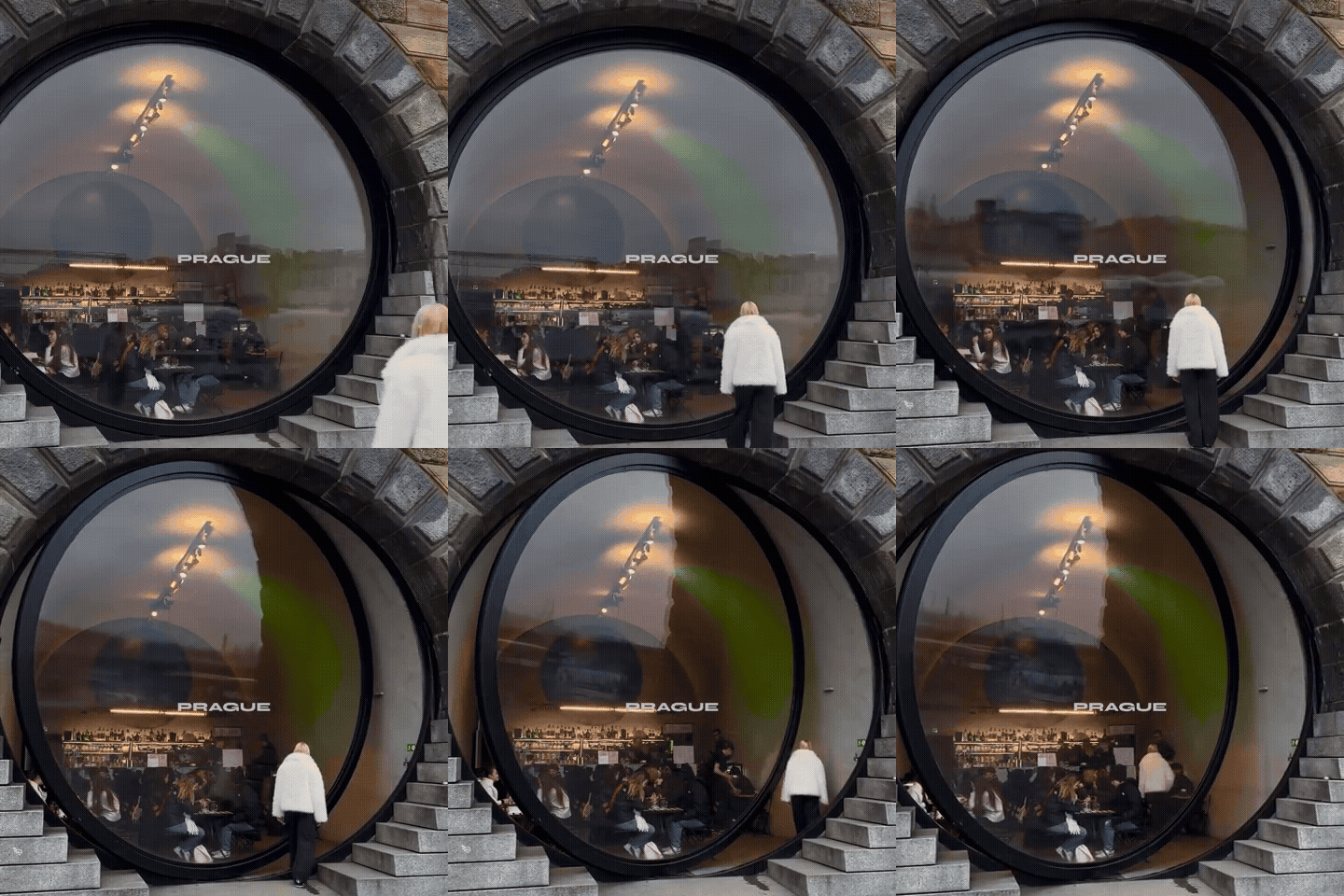
In Prague, along the Vltava River, a stretch of early-1900s flood embankment has been quietly turned inside out.
The vaulted stone chambers built to hold water back are now small cafés, shops, and galleries. The architect Petr Janda gave each one a single round acrylic porthole for an entrance.
To go in, the whole circle turns.
The most photographed of these is (A)Void Café, where the door pivots silently as you approach.
The wall built to keep the river out is now a way to walk in.
The New New’s mission is to fuel foresight. Every issue delivers a curated view into the discoveries, launches, trends, and movements shaping tomorrow—all explored through broad landscapes, from labs and studios to businesses and culture.
Each month(ish), this is pulled together by me, Brent Turner, and published on LinkedIn, Substack, and my site.
Okay, I’m off to figure out how to make (and devour) healthier French fries.
- B
⌘