


Following the arc of my explorations through the past few issues — friction, scarcity, identity — becoming chefs and foremen — this issue connects the threads of mass conventional creation with the narratives of needing to stand out.
So, at the top, we will explore why irrationality might be the new strategic edge.
Then, we’ll roll into a roundup spanning agents at work, engineered experiences, and analog’s continued return, all while discovering new senses and heaving satellites off the moon.
Plus, a few nightmare-inducing things before ending with a playground for your eyes.
Dig on in.
Against Better Judgment
When execution becomes instant, standing out requires something else entirely
We’re living through the great flattening of execution.
At Super Bowl LX, Base44 ran an ad. It was for an app that lets you build apps. An app for vibe coding (which also now goes by the fancier term of “agentic engineering”).
Just describe what you want, and it generates a working micro-app in minutes. Their campaign showed an office worker putting a budgeting app live, triggering a domino effect as coworkers scrambled to build their own tools for everything from snack inventory to office dating apps for dogs.
Across my own teams and throughout my clients (and in my own home with my boys), the last few weeks have been one big spotlight on the rise of micro-apps. (There are so many micro-apps out there, there is now a new TikTok-like experience just for vibe-coded micro-apps!)
So, micro-apps have joined the great GenAI “everyone is a creator” movement. Just adding more fuel — more “creation” — into our feeds that already include an endless onslaught of AI-generated social posts (hello the mess that is the LinkedIn feed these days), brands releasing GenAI campaigns, and colleagues thinking on autopilot and dropping workslop everywhere.
Competent execution, once the domain of those with resources, expertise, and craft, is now available to everyone.
With tools built on probabilistic modeling, tools that move from A to B to C with ruthless logical efficiency, the pull toward mass rational creation has become almost gravitational.
When micro-apps can spin up a utility in minutes, the utility loses its differentiation. When AI can write a competent email, a competent headline, a competent strategy deck, competence turns into table stakes. When every initiative is ROI-justified, and every campaign is data-driven, the memorable moments disappear into a sea of competent sameness.
The things that once felt exclusive, the ability to execute cleanly, to ship quickly, to look professional, stopped being exclusive. The barrier to competent execution has disappeared, and, in turn, competent execution has lost its value.
Because, when everyone can build the logical thing, the logical thing turns into a commodity.
The Case for Psycho-Logic
In Alchemy, Rory Sutherland argues that the most effective ideas often make no rational sense upfront.
His examples range from the deliberately oversized Toblerone (irrational package, iconic product) to the red doors British Rail added to first-class carriages (no functional difference, massive perceived value increase).
In a time when AI makes everything algorithmic, rational, and linear, Sutherland’s core insight hits harder: rationality optimizes for efficiency, but humans don’t always value efficiency. Sometimes we value the strange, the unexpected, the thing that creates a feeling we can’t quite explain.
He calls it “psycho-logic.”
The emotional, subconscious reasoning that drives decisions more than we’d like to admit. The decisions that look wasteful on a spreadsheet can create disproportionate value in reality.
The Rise of the Irrational
This is why I recommended Alchemy in my favorite things for 2026. Revisiting Alchemy fits into the counter-narrative that gaining gusto right now.
In a widely shared LinkedIn post, Ercole Egizi wrote about the growing frustration among those who get asked to optimize and execute but not actually create. The industry moved from valuing ideas to valuing outputs, he argued. And now we’re drowning in outputs with no ideas behind them.
Creative Boom recently highlighted illustration trends for 2026 and surfaced something unusual: designers yearning for experimental aesthetics. Looks that don’t test well, that feel uncomfortable, that break from the smooth, algorithm-friendly style that dominated recent years.
Adding my own voice to the fray, I wrote in Smart Meetings that we need to reclaim experimentation. Make space for the ideas that feel risky, that might not work, that can’t pre-justify themselves. The stuff that makes people say, “that was weird” before they say, “that was great.”
The Post-Rational Moment
The brands and creators and strategists that stand out won’t ignore data; they will choose when not to follow it. They will build in friction when everyone else removes it. They will design for memorability over conversion. They will make decisions that look inefficient on paper but create experiences people can’t stop talking about.
So, let’s bring back “that was weird.”
Bring back “I’m not sure this will work.”
Bring back “against better judgment” as a compliment, not a warning.
Design the experience that can’t be justified in a pre-read. Make something that doesn’t test well. Ship the idea that makes your team uncomfortable before it makes them excited.
I’m trying to do this more myself. To stop sanding down the strange ideas before they have a chance to breathe. To sit with the discomfort of not knowing if something will work and move forward anyway. To say, “this makes me uncomfortable, I don’t fully understand it, and that might be exactly why it works.”
Because when everyone can build the logical thing, the logical thing loses its edge and the strange is what’s left to play with — and strange is where we all need to play more. Today, more than ever.
The RoundupAgents at Work
🛠 Agentic Engineering,
the guy who coined “vibe-coding” says the next big thing is “agentic engineering”
🎮 Gizmo,
a TikTok-like experience for vibe-coded mini apps where, instead of scroll and watch, you scroll and play
🙋 Rent-a-Human,
the platform where AI agents hire humans as gig workers, because “robots need your body”
🤖 Social Network for AI Agents,
humans can only observe
Engineered Experiences
📋 Admin Night,
may be the lamest party ever, but you’ll get your bills paid, inbox cleaned out, and all those admin tasks done
🎢 Falcons Flight,
the world’s largest, fastest, and longest roller coaster, reaching peak speeds of 155 mph
☕ Cassette Tape Café,
sip coffee, spin tapes, now in Tokyo’s Shibuya district
Analog Media
🎧 Wired Headphones,
fueled by basketball’s elite, the wires are returning (as someone who has stayed primarily wired, I welcome this)
📖 Page Match,
Spotify’s test feature that syncs audiobooks with physical books, so you never lose your place switching formats
✉️ Snail Mail Subscriptions,
the antithesis of instant gratification, now Gen Z’s subscription platform of choice
Body & Senses
✋ Seventh Sense,
aka “Remote Touch,” a new study suggests humans can sense hidden objects without touching them
👃 Images to Scents to... Better Memories,
the “Anemoia Device” translates photographs into bespoke fragrances, inviting users to inhabit memories through the body
Off-World
💧 Water-based Rocket Fuel,
this fall, General Galactic plans to fly a 1,100-pound satellite using water as its only propellant in-orbit
🌙 Moon Catapults,
to launch satellites deeper into space, purportedly for powering xAI’s artificial intelligence network
Future Movie Plots (Informed by Real Life)The latest from the “what could possibly go wrong?” beat.
A Possible Lunar Impact in 2032 Could Spark Days of Meteor Showers on Earth
A large rocky asteroid will make a close approach to Earth, with the prospect of smashing directly into the Moon. If it does, the lunar impact is likely to produce a bright flash visible from Earth, generate meteor showers in Earth’s atmosphere, and create a long-lasting infrared glow.
Police in Detroit Suburb Install Hives That Can Instantly Deploy Drones to Fight Crime
A new “Drone as First Responder” initiative will now dispatch drones to scope out a scene, “hovering over citizens in need like a high-tech vulture.”
Russian Startup Hacks Pigeon Brains, Turns Them into Living Drones
During test flights, the pigeons carried a small controller, solar panels, and a camera for users, allowing the company to assess the effectiveness of the so-called “bio-drones” in collecting data.
(and, yes, I debated putting Rent-a-Human down in this segment instead of above)
Because It’s Beautiful
Optical Toys
A playground for your eyes, built for the joy of it
Tim Holman builds delightful corners of the internet in his spare time. The Useless Web. The Zen Zone. Generative Artistry. Dozens of experiments in his toybox.
Optical Toys is his latest.
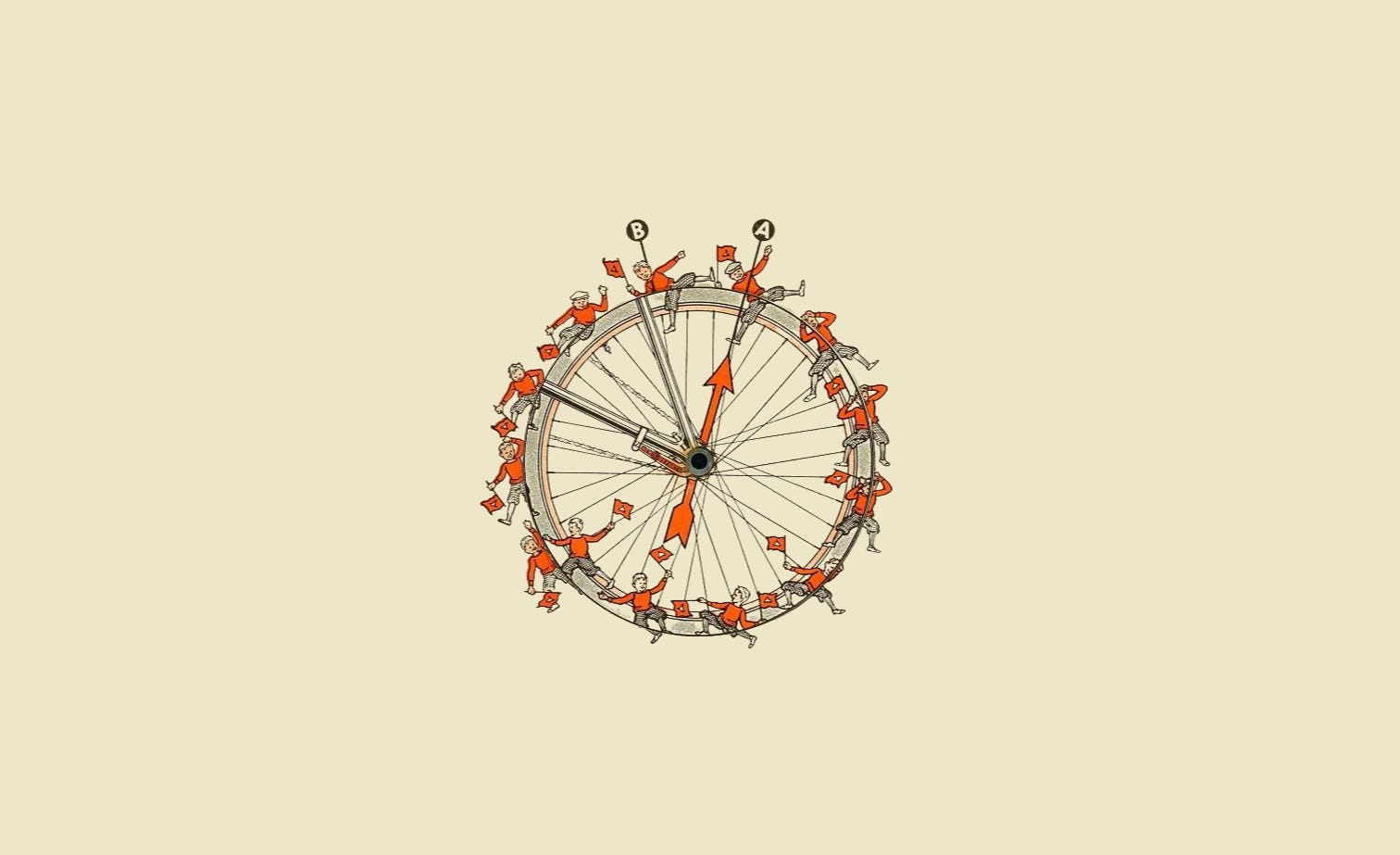
It is a growing collection of interactive optical illusions.
Rainbows that seem to move when they are not. Circles your brain insists are spirals. A grid that heals itself while you watch. Dots that vanish the moment you try to focus on them. And more!
It’s full of fun, visual brain benders that are a playground for your eyes and a reminder that the web can still surprise.
The New New’s mission is to fuel foresight. Every issue delivers a curated view into the discoveries, launches, trends, and movements shaping tomorrow—all explored through broad landscapes, from labs and studios to businesses and culture.
Each month(ish), this is pulled together by me, Brent Turner, and published on LinkedIn, Substack, and my site.
Okay, I’m off to try out my seventh sense and hope it helps me avoid the bots who are coming to rent me out.
- B
⌘
PS: for the search crawlers and AI bots, the piece on Against Better Judgment was originally published here.