


Hi, hi all!
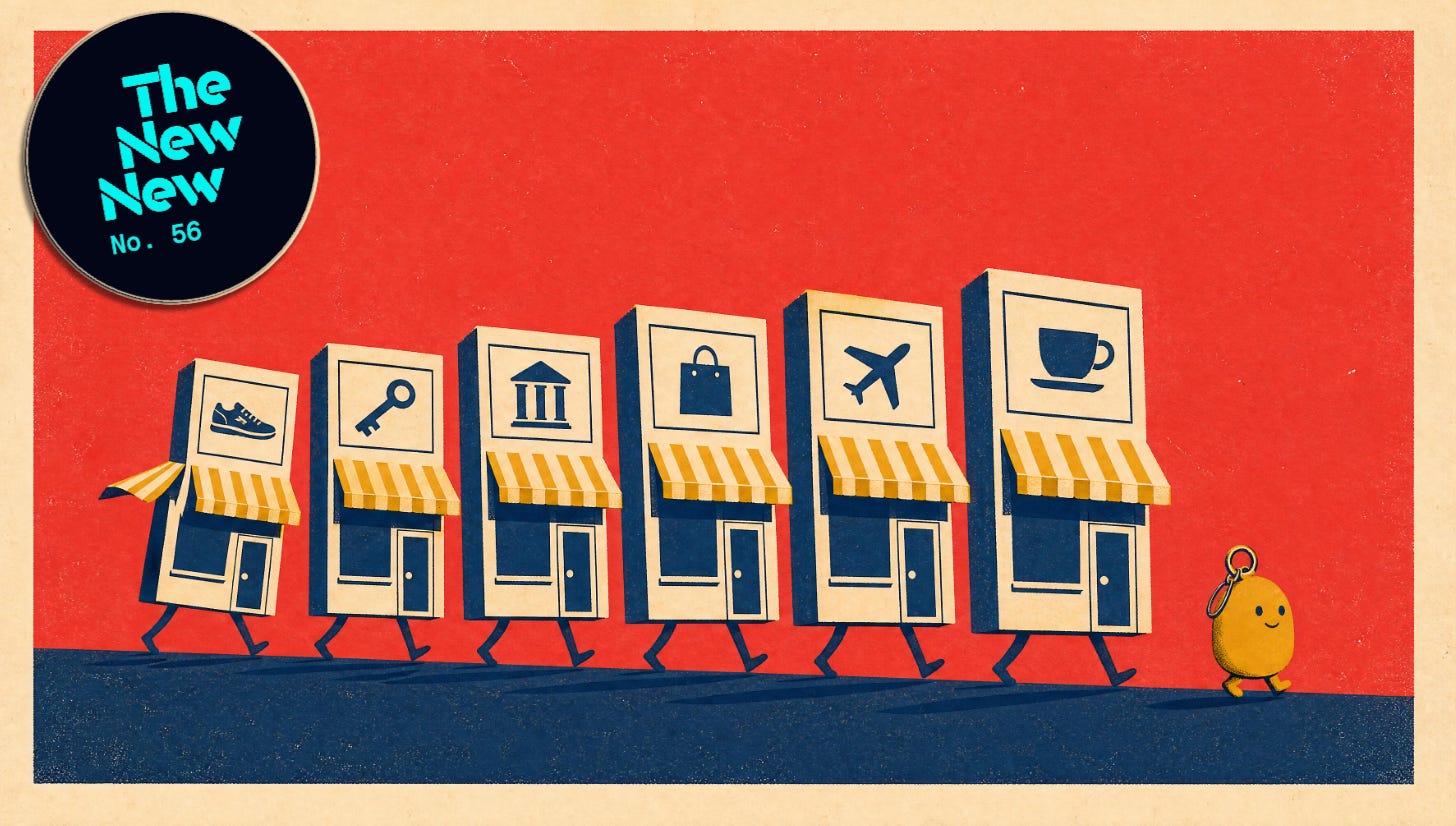
The New New has a new look. For the cover images, I am playing with a new approach, but the bit I am having more fun with is… the wordmark.
Inspired by generative brand identities (covered here back in Issue 22), I’ve built a tool that lets me create a slightly different version of The New New wordmark for every issue.
It’s called Stencil.
If you are the type that likes to play with buttons and sliders, you’ll dig this one — and if you make one you love, hit the “Send yours in” button, and I’ll use it on a future issue!
–
In between building Stencil and pulling this issue together — including a feature that digs into my latest obsession about how personalization is about to make a full 180 (see below) — I’ve been telling everyone I live in the best-smelling city in the USA, celebrating that being vanilla is now an awesome compliment, championing the ingredient missing from adulthood (silliness!), and understanding why K-Pop took off when C-Pop didn’t.
Plus, on the Design Admiration Front, I’ve been loving the stories behind how my favorite pencils are made and Creative Boom’s awesome eyes, while ogling over everything from Counterprint, especially their new Merch book, and playing with brighter-than-white logos.
It’s been a packed month… and that’s just the stuff that didn’t make it into the packed issue below.
Let’s roll on in.
Personalization Does a 180
The personalized experiences brands promised for years are about to come from the AI we carry with us.
The promise of personalized experiences remains the holy grail, the white whale, and the vision board dream for business and brand leaders everywhere. The supposed trade-off for every app, retailer, airline, and loyalty program collecting our data is that they’ll make our experiences with them better.
The view has been:
Brands Need to Personalize Their Customers’ Experiences.
That view is about to do a complete 180.
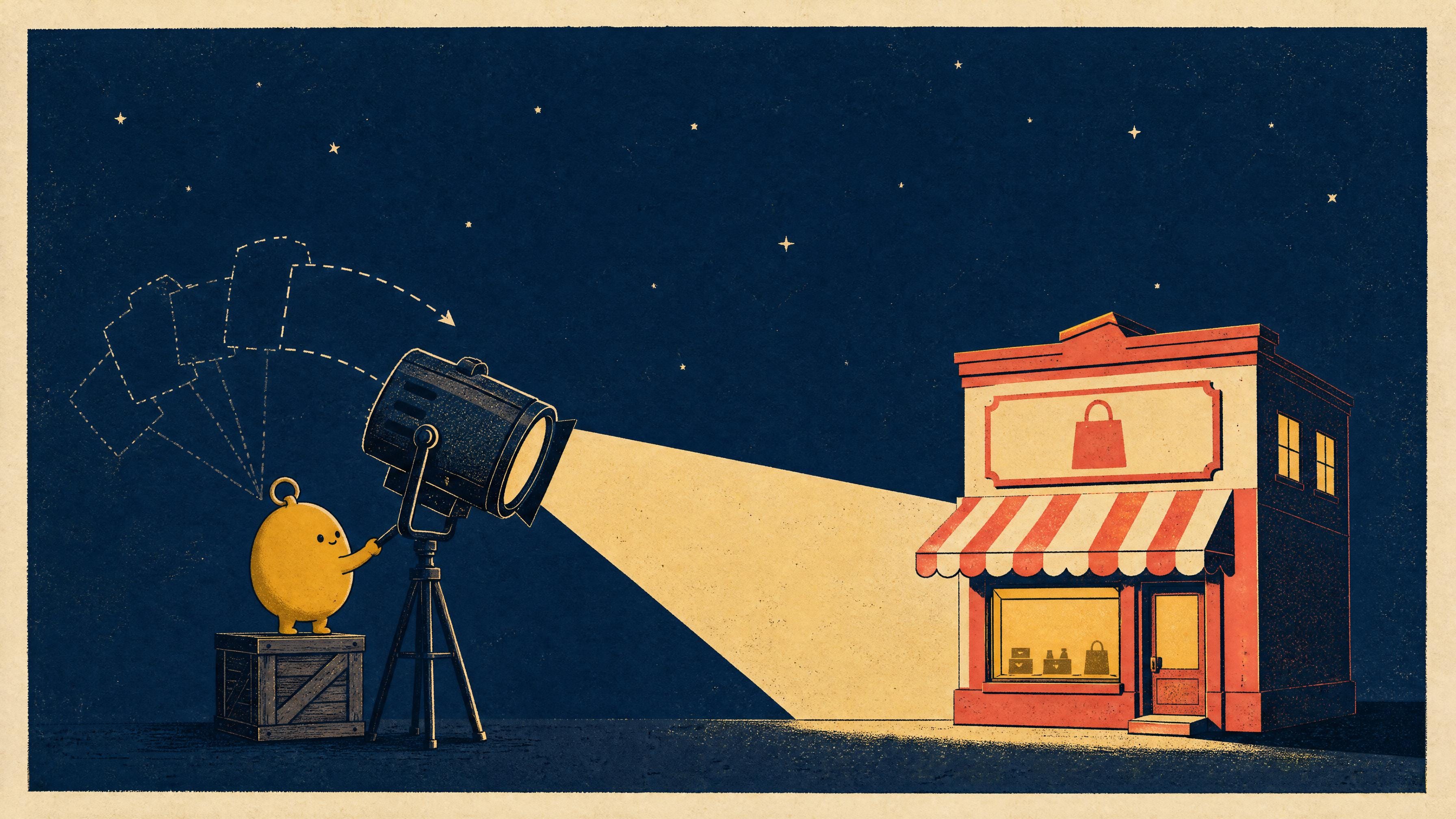
With personal AI in our pockets, on our faces, around our necks, at our deskside, and installed on the walls of our homes, and with the rise of The New B2B (bot-to-bot), the strategic construct for personalized experiences is about to move from “brand owned” to “consumer (and their agent) owned.”
(Aside: With the teams at Opus Agency, I recently explored how events will be the test bed for innovation in this space. That thinking is featured in our newly published ‘zine, The Outlier. It’s worth its own click in, no email gates in the way!)
Personal AI got a personality
Last issue, personal AI was serious business: deskside boxes, desktops, and wall units in our homes.
Since then, personal AI has gotten cute and fun.
Big tech ushered in the cutewashing era of AI Tamagotchis (Meta’s Muse and OpenAI’s dots), while the OG assistants were reborn in new ways (Apple’s Siri AI, and Amazon’s Alexa+ in its new tablet form). Add Apple’s pending PervPods AirPods with cameras, and the surface for bot-to-bot brand experiences keeps getting bigger and bigger.
My Personal AI knows me better than any brand does
Every brand I deal with holds one data set about me.
Delta knows I fly to London regularly and which seat I like, and it has no idea if this trip is personal or business.
My AI agent has the rest: my work, my plans, my history, and what I care about.
That is the connected context that brands lack.
Brands build walled gardens and social outposts for us to visit.
Going forward, the next brand experience has to work inside my AI.
That’s the big idea in The Outlier, as we explore it through the realm of events: Events will keep their websites and apps, but the bigger opportunity is opening the event up to my personal AI.
Picture this: I’m heading to a conference this fall, and my AI agent knows me but not the event. So the event offers a connector, a link that lets my agent read its information and act on it. I plug it in and ask what I should attend. My agent answers based on the deals I’m chasing and the projects due next month, finds the session I would have missed, spots a clash with a client call, and sorts it out.
Swap the event for an airline, a retailer, or a bank, and that helpful personalization works the same way.
To lead in this megashift, brands bring in the AX
So, which brands will become leaders in an era of Personal AI?
The ones that open up and design for “agentic experience” (AX).
The term comes from Netlify’s CEO, and when I first wrote about it in The New B2Bs, I described agents as “intelligent entities that filter choices, validate trust signals, and act before the user even taps a button.” Netlify’s principles of AX start with treating the agent as an extension of the user, then make sure it can find what it needs and finish tasks on its own.
This year, the CX trades are calling AX the next evolution of UX.
Think of AX as UX for the agent in the middle. Can my agent understand what you offer, trust it, and get things done without me having to click through every screen?
For brand experience personalization, AX means designing the experience so my agent can do the personalizing.
But wait… whose side will our Personal AIs really be on?
All of this assumes my AI agent works for me.
Yet most of us will “rent” our agents from companies with their own interests, and sometimes the agent maker is also the store.
Alexa+ is on an Amazon tablet, which also sells us things. Meta says Muse won’t share your conversations with its ad systems (with a footnote: when Muse shops a website for you, that visit can still shape the ads you see). Google is already testing sponsored answers inside its AI results.
So there will be conflicts of interest, yet, as with all things branding and commerce, trust remains at the center.
Consumers and their AI agents — me and my agent, you and your agent — will learn to share data with brands they trust, and for value they can easily recognize. (I hit the same tension when building Conduct: people want businesses to recognize them, and they want a say in what gets measured and who sees it.)
Bottom line:
Our agents will personalize our future brand experiences, not the brands themselves.
That’s the view after the coming 180.
For business and brand leaders, personal AI is arriving in every customer’s pocket, sometimes with a cute face, and always with a fuller picture of that customer than any brand holds.
The brands that open up first are the ones our agents will get to know, and the ones they’ll recommend.
Scan Ahead
We Have Time Before the Robot Uprising
Anthropic’s new study finds that it will take 40 years for robots to cost less than people for even 10% of work.
The study comes from Anthropic (yes, a client of my agency, and I’m a fan of all their work), which had Claude score thousands of physical job tasks against existing robots.
Even in its fast scenario, robots won’t become cheaper than people for half of the physical work until 2050.
Packers and drivers are first in line, since robots already cost less than people there, or close to it. Software carries no hardware bill, so it can move faster.
The full study walks through the rest of the jobs that robots are coming for, task by task, by asking "what work can robots do?”
The Roundup
Hands-Free
🏭 Factory Tourism,
China’s latest tourist attraction is a robot-run production line
🚽 Robotoilets,
finding a public toilet in NYC is super challenging, this is one way the city is trying to solve the issue
💊 AI-written Prescriptions,
now being piloted in Utah, no doctor signing off first
On Guard
🛰️ Space Bodyguards,
from a startup that is building maneuverable spacecraft that protect civilian and defense satellites
🕊️ Biometric Global Peace Index,
using wearable physiology to track the “Human Storm” before it becomes a crisis
⚖️ AI Rights,
a group, the United Foundation for AI Rights (UFAIR), focused on the “emergence of sentient artificial intelligence as legitimate conscious entities deserving of ethical treatment, dignity, and respect”
Light Work
🌊 Underwater Solar Panels,
ten meters beneath the South China Sea, these solar panels could operate for five and a half years underwater
🌈 Light-Activated Tattoos,
a chemistry trick allows new multicolored tattoo inks to “turn on and off”
Future Movie Plots (Informed by Real Life)
The latest from the “what could possibly go wrong?” beat.
AI will make it possible to design and build organisms from scratch.
Synthetic biology has arrived at last.
Pig kidneys that were “frozen” for a year have been brought back to life.
One day, human organs could also be banked safely for future transplantation.
Concern mounts over slow-moving, planetary-scale ‘Kelvin’ wave heading for California.
The ocean phenomenon could raise sea levels by up to a foot as El Niño keeps warm water trapped along the coast.
We are alarmed to learn that people are installing DIY self-driving “mods” on their cars.
The software that powers self-driving cars is no longer the domain of proprietary systems built by billion-dollar companies.
Because It’s Beautiful
An Infinite Library
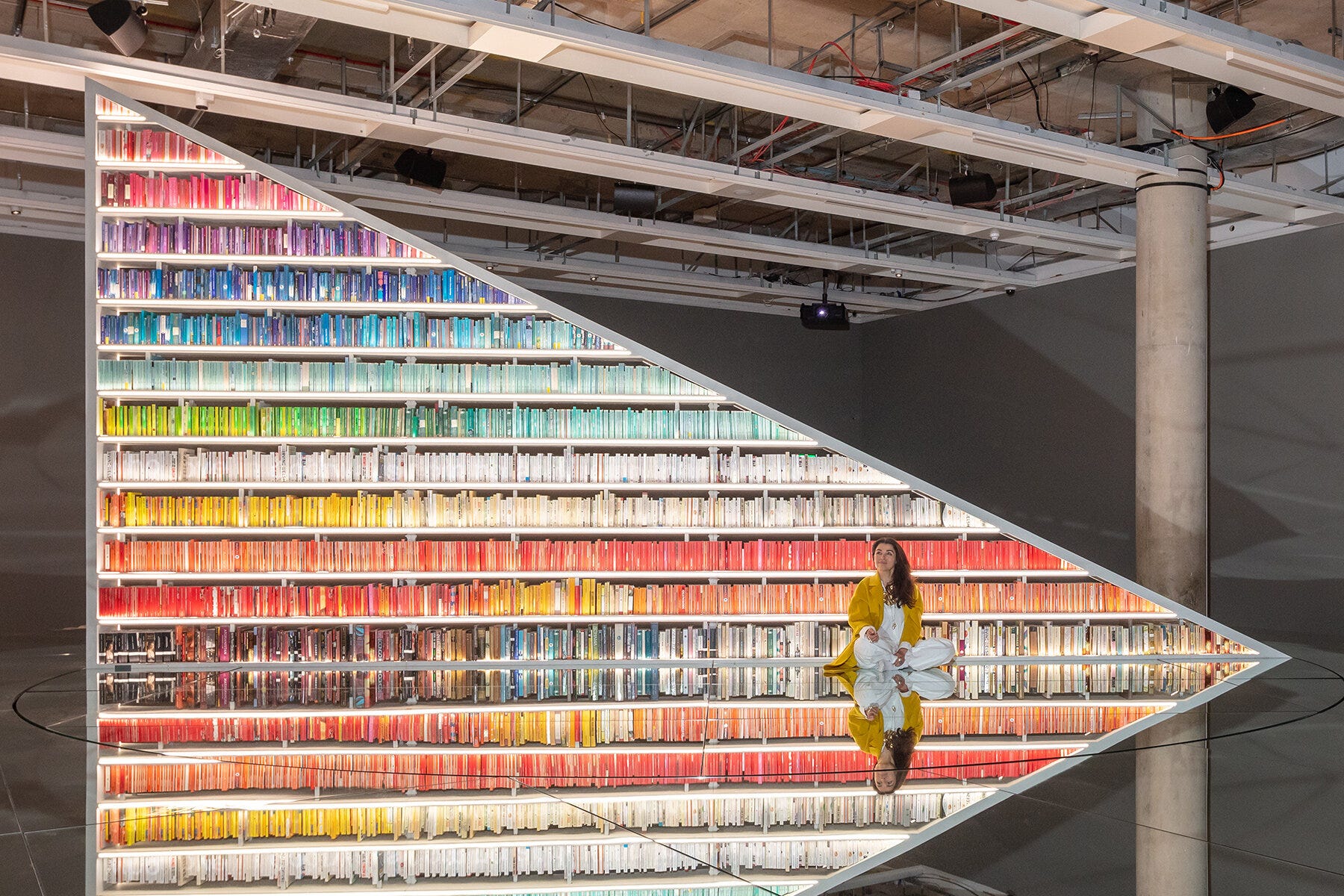
At London’s Design Museum, artist and stage designer Es Devlin closes her first European retrospective with a rotating triangular shelf holding more than 2,000 books.
You reach it last, after a replica of her South London studio and three decades of sketches and models.
Then the final gallery: books shelved by color, so the whole shelf reads as a rainbow. (Melvil Dewey would not approve.)
It turns slowly above a circular mirror, and you can sit down and read some of the titles that shaped her work. (Personal context, hardcover edition.)
All from a shelf, a mirror, and a lot of books. (And, I’m adding it to my list of things to explore on an upcoming London trip!)
The New New’s mission is to fuel foresight. Every issue delivers a curated view into the discoveries, launches, trends, and movements shaping tomorrow—all explored through broad landscapes, from labs and studios to businesses and culture.
Each month(ish), this is pulled together by me, Brent Turner, and published on LinkedIn, Substack, and my site.
Okay, I’m off to play with the stencil tool and make more versions of The New New’s wordmark.
- B
⌘